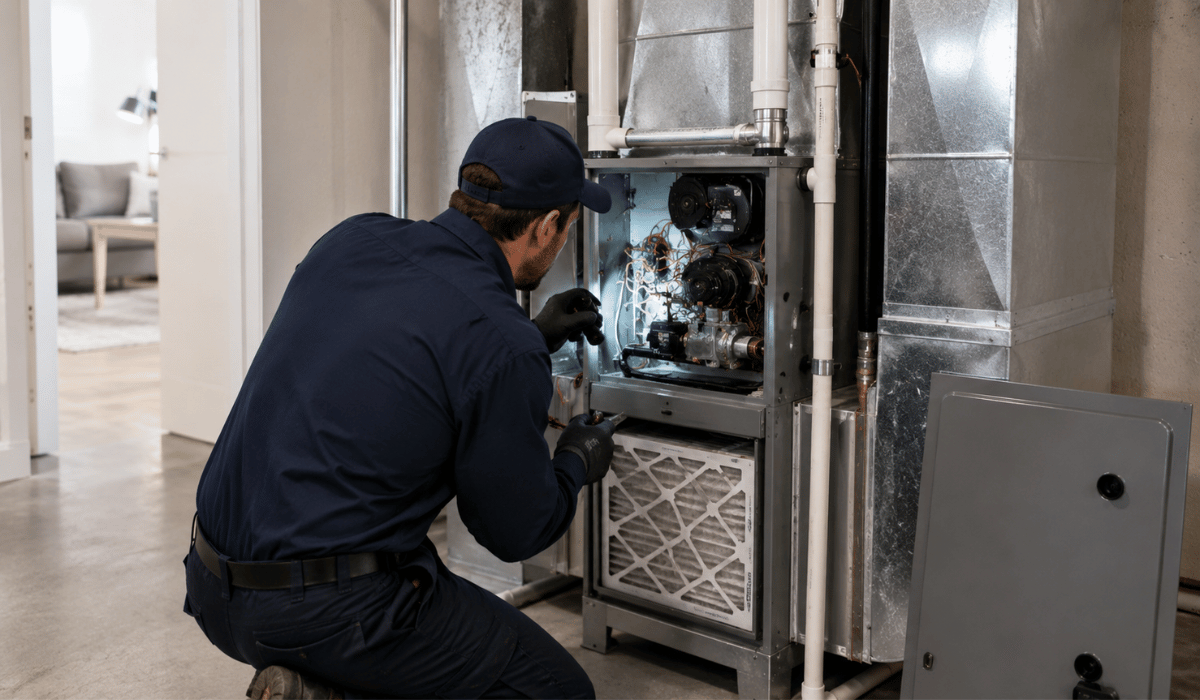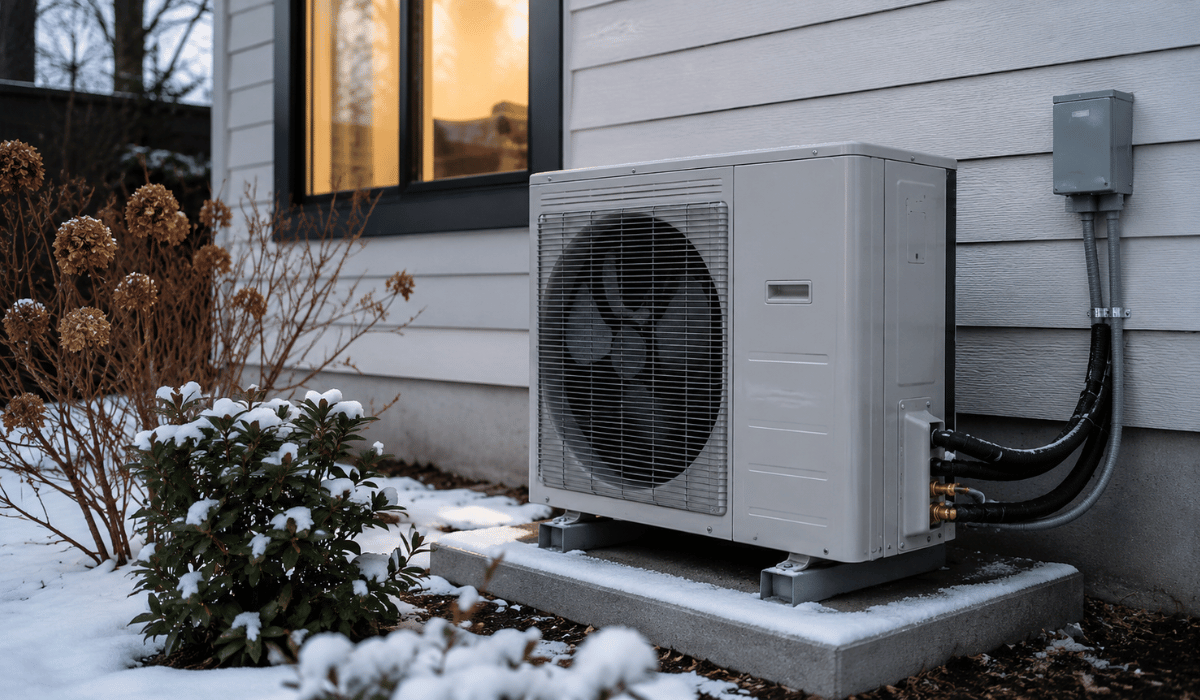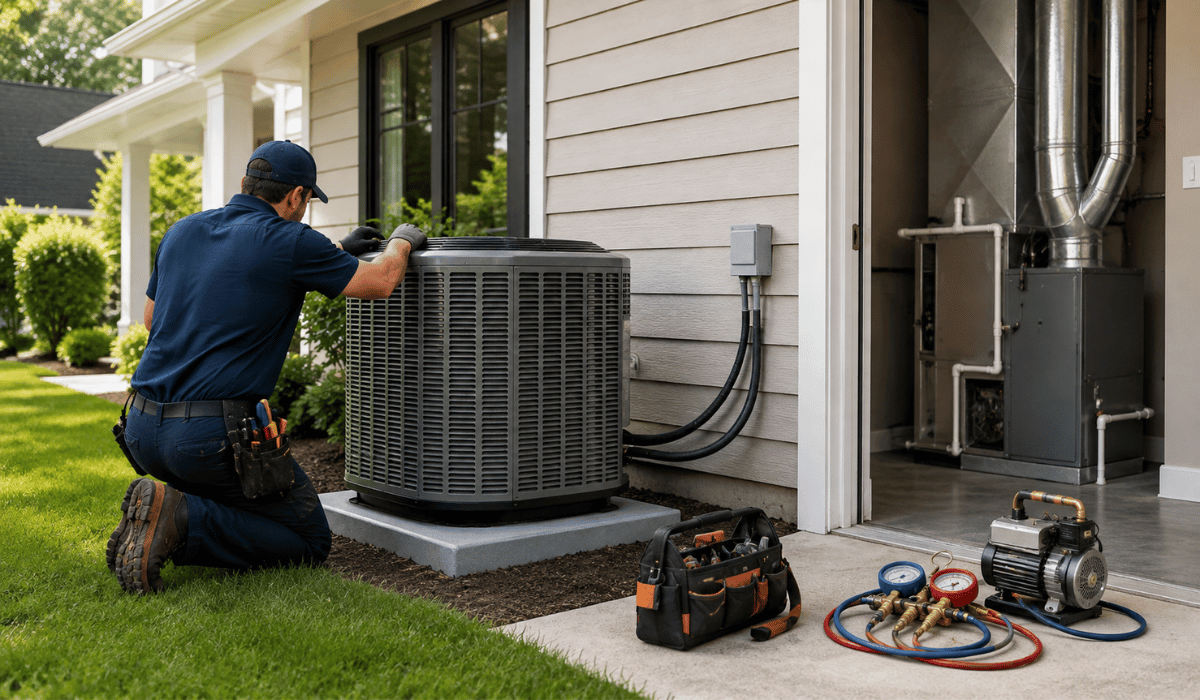




AC gas leakage occurs when refrigerant escapes from the sealed lines and components that carry heat through an air-conditioning system.
Although homeowners often call this substance “AC gas,” the more accurate term is refrigerant.
It does not normally get used up like fuel. If the refrigerant level is low, the system may have a leak, an incorrect initial charge, or a previous service issue.
A refrigerant leak can reduce cooling, raise energy use, and strain the compressor.
Recognizing the warning signs helps homeowners arrange an inspection before comfort declines further.
What Is AC Gas Leakage?
AC gas leakage is the escape of refrigerant from the sealed circuit connecting an air conditioner’s indoor and outdoor components.
Refrigerant absorbs indoor heat at the evaporator coil and releases it outside through the condenser.
Refrigerants do not normally run out or require routine refilling.
A low refrigerant level may indicate a cracked line, damaged coil, loose connection, or failed seal.
Because airflow and thermostat problems can cause similar symptoms, a qualified technician should inspect the system to confirm the leak.
Top Signs of an AC Refrigerant Leak
No single symptom proves that refrigerant is leaking. Several related changes, however, can indicate that the sealed system needs evaluation.
The AC Blows Warm or Insufficiently Cool Air
One of the clearest warning signs is air that does not feel as cool as usual.
The unit may run, the blower may operate, and air may reach the vents, yet the home remains above the selected temperature.
First confirm that the thermostat is set to cooling and the filter is not heavily restricted. A technician can then determine whether refrigerant or another component is responsible.
Cooling Cycles Become Longer
An undercharged system may run longer because it has less capacity to remove heat. Duct leakage, dirty coils, extreme weather, and aging equipment can cause similar behavior, so runtime alone does not prove a leak.
Ice Forms on the Indoor Coil or Refrigerant Line
Low refrigerant pressure can cause the evaporator coil to become unusually cold.
Moisture from the air may freeze on the coil or the copper line near the indoor unit. Restricted airflow from a dirty filter, blocked return, or blower fault can create similar icing.
Turn off cooling if substantial ice is visible and let the equipment thaw. Do not scrape the ice or use direct heat.
Hissing or Bubbling Sounds Develop
A leak may produce hissing near a coil, line, valve, or connection. Because normal pressure changes and airflow can also create noise, a persistent new sound is more concerning when cooling has declined.
Energy Use Rises Without an Obvious Explanation
Reduced capacity may increase runtime and electricity use. A higher bill is more meaningful when it appears with warm airflow or icing, but weather, rates, occupancy, and thermostat settings must also be considered.
Oily Residue Appears Near AC Components
Escaping refrigerant can carry traces of compressor oil, leaving residue around a coil, fitting, valve, or line. Do not open panels or touch an unknown substance to investigate it.
Common Reasons for AC Gas Leakage
Refrigerants may escape from different points, and the defect must be located before a lasting repair can be made.
Corrosion or Coil Damage
Coil tubing can deteriorate through corrosion, physical damage, defects, or environmental exposure. Whether repair is practical depends on the leak location, material, equipment condition, and manufacturer guidance.
Loose Fittings and Failed Joints
Brazed joints, flare connections, and valves may weaken through installation errors, vibration, temperature changes, or mechanical stress. Incorrect tightening or sealing can worsen the damage.
Vibration and Refrigerant-Line Wear
Unsupported tubing may rub against metal until a hole develops. Renovations, landscaping, or servicing can also damage a line. A lasting repair must correct the contact point and provide suitable support.
Poor Installation or Incorrect Charging
Poorly sealed connections or an incorrect initial charge can cause problems from the beginning.
Because line length and manufacturer specifications affect charging, measurements are needed to distinguish undercharging from leakage.
Aging Components and Previous Repairs
Seals, valves, coils, and tubing can fail with age, while an earlier repair may leak again. Repeated refrigerant loss suggests that the underlying defect remains unresolved.
How an AC Refrigerant Leak Is Diagnosed
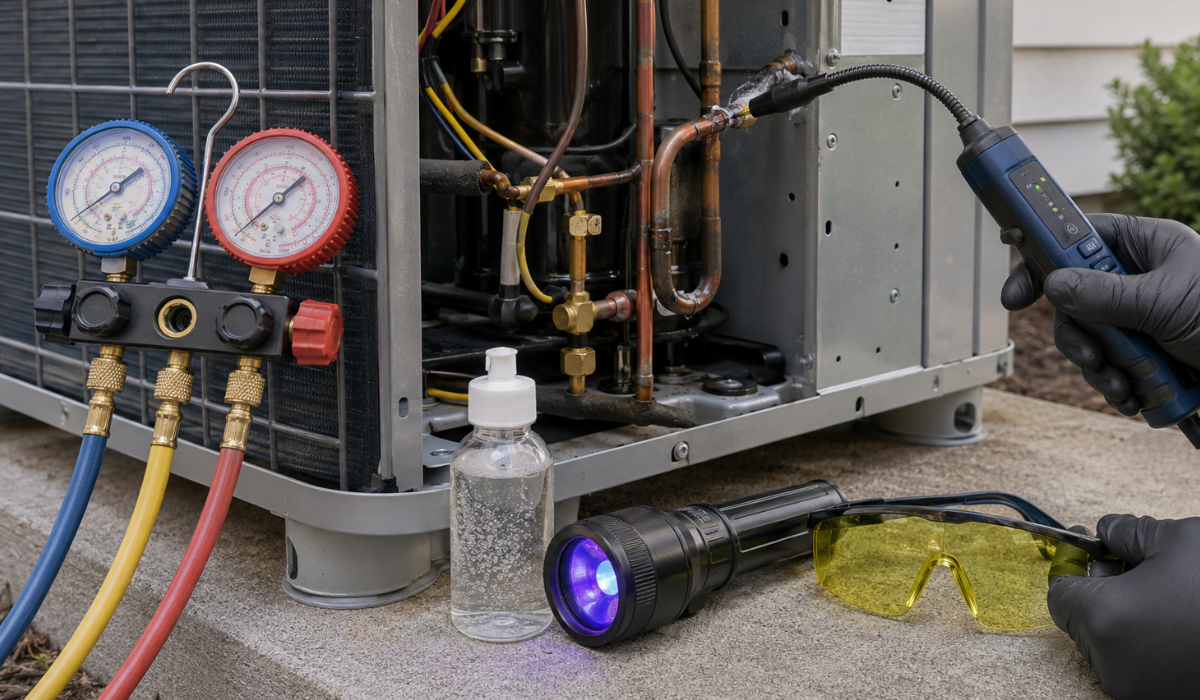
A qualified technician begins by reviewing the symptoms and checking airflow, coil condition, thermostat operation, and system performance.
Pressure and temperature measurements can show that the charge may be incorrect, but they do not identify the exact leak location.
The technician may use an electronic detector, compatible solution, ultraviolet dye, or approved pressure test. The method depends on the refrigerant, design, and suspected leak size.
The system’s refrigerant type should be confirmed from the equipment label.
Refrigerants are not automatically interchangeable, and adding the wrong product can damage equipment or create unsafe operating conditions.
How to Fix AC Gas Leakage
A proper repair addresses both the opening and the lost charge.
The technician may tighten or replace a service component, repair an accessible line, braze a suitable joint, or replace a leaking coil. The best option depends on whether the part can be repaired reliably.
Afterward, the circuit may be pressure-tested and evacuated to remove air and moisture. The technician then charges it to specification and verifies cooling operation.
Adding refrigerant without locating the source may restore cooling temporarily, but the new charge can escape through the same opening.
Refrigerant repair is not a DIY project. It involves pressurized equipment, specialized tools, electrical components, and federal handling requirements.
What Should You Do If You Suspect a Leak?
Turn the system off if the coil is frozen, cooling drops sharply, or unfamiliar hissing develops.
Do not cut lines, open service valves, apply household sealants, or use an unverified recharge kit. Schedule AC repair and describe when each symptom began.
If anyone experiences breathing difficulty, dizziness, or other sudden symptoms near a suspected release, move to fresh air and seek appropriate medical or emergency guidance. Do not re-enter an unsafe space solely to shut down the system.
Can AC Refrigerant Leaks Be Prevented?
Correct installation and routine service can reduce avoidable problems. Lines should be supported, protected from rubbing, and kept safe from yard tools.
Maintenance may reveal oil staining, deteriorated insulation, abnormal readings, or declining cooling.
Filters should also be replaced according to product instructions because restricted airflow can imitate refrigerant-related symptoms.
When Repair and Replacement Should Be Compared
Repair may be reasonable when the defect is accessible and the rest of the system remains sound.
Consider replacement when corrosion is extensive, leaks return, essential parts are unavailable, or other major problems exist.
Compare system age, refrigerant type, warranty, repair history, and energy performance after receiving a diagnosis.
Conclusion
AC gas leakage can reduce cooling performance, increase energy use, and place additional strain on the compressor.
Warning signs such as warm airflow, frozen coils, longer cooling cycles, unusual sounds, or oily residue should be professionally evaluated because other AC problems can produce similar symptoms.
A lasting solution involves locating and repairing the leak before restoring the refrigerant to the correct level.
If you suspect a refrigerant leak, Holtkamp HVAC & Plumbing can inspect your system and recommend an appropriate repair for your home in Suwanee, GA, or a surrounding community.
Schedule AC Leak Repair With Holtkamp HVAC & Plumbing
Warm airflow, frozen coils, longer cycles, and unexplained performance loss may point to refrigerant leakage, but proper testing is needed to confirm the cause.
Holtkamp HVAC & Plumbing can inspect your air conditioner, locate the problem, and explain the available repair options.
Schedule service if your cooling system is no longer maintaining comfort in Suwanee, GA, or a surrounding community.
Timely attention can help limit compressor strain and prevent repeated refrigerant loss.
Frequently Asked Questions
Does AC refrigerant need to be refilled every year?
Refrigerant circulates through a sealed system and should not need routine annual refilling. Repeatedly low levels may indicate a leak or an incorrect previous charge that requires professional inspection.
Can an AC continue running with low refrigerant?
An AC may continue operating with low refrigerant, but its cooling performance can decline and the compressor may experience additional strain. Turn the system off if heavy ice develops or cooling changes significantly, then schedule a professional diagnosis.
How long does an AC leak repair take?
The repair time depends on the leak’s location, the damaged component, part availability, and the testing required afterward. Repairing an accessible refrigerant line usually takes less time than replacing a leaking evaporator coil.
Is refrigerant leakage dangerous?
The level of risk depends on the refrigerant type, amount released, ventilation, and exposure conditions. Avoid direct contact and leave the area if a significant release is suspected, particularly in an enclosed space. Have a certified technician evaluate the system.
Will a new refrigerant charge fix the problem?
A new refrigerant charge may temporarily restore cooling, but it will not resolve the source of the leak. The damaged area must be repaired, and the system should be tested and charged according to its specifications.
Can a refrigerant leak cause water around the indoor unit?
Low refrigerant can cause the evaporator coil to freeze. As the ice melts, water may overflow the drain pan or collect near the indoor unit. A blocked drain or another condensation problem can produce similar symptoms, so proper diagnosis is necessary.