



If you’re curious about how long AC installation takes, you’re in the right place.
In this blog, we’ll discuss how long it typically takes professionals to install a new AC and the factors that can affect the installation time.
Whether the project is small or complex can also determine how long the AC installation takes.
How Long Does an AC Installation Take in Suwanee, GA?
The installation timeline depends on whether the project involves a residential or commercial property.
A standard residential AC installation can often be completed within one working day when the existing ductwork, refrigerant lines, and electrical connections are compatible with the new system.
Commercial AC installation may take one day or several days, depending on the property’s size, system type, number of units, and accessibility of the work areas.
Contractors may also schedule the work outside normal business hours to minimize disruption to employees and customers.
Installing multiple units generally requires more time. Electrical upgrades, extensive ductwork, equipment relocation, difficult access, and a complete system redesign can also extend the project.
The best way to obtain an accurate timeline is to consult a provider offering air conditioning services near you in Suwanee, GA. An HVAC specialist can inspect the property, determine the scope of work, and provide a realistic installation schedule.
Typical AC Installation Timelines by Project Type
Every home is different, but the following estimates provide a general idea of how long common projects may take.
|
Type of AC installation |
General timeline |
|
Basic replacement with compatible equipment |
One working day |
|
AC and furnace replacement |
One full day or longer |
|
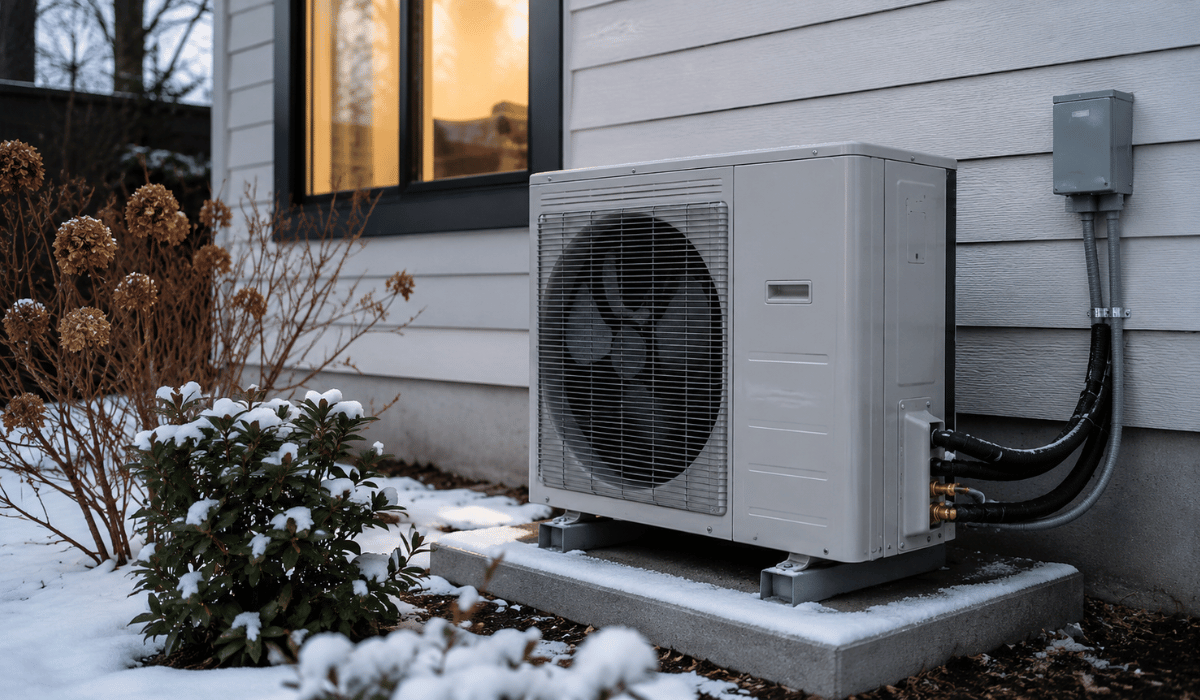
Heat pump installation |
One to two days |
|
Ductless mini-split installation |
One day for a simple setup; longer for multiple zones |
|
Installation with moderate duct modifications |
One to two days |
|
Installation with new ductwork |
Several days, depending on the home |
|
New construction or major HVAC redesign |
Several days across different construction stages |
These are planning estimates rather than guaranteed completion times. A contractor should inspect the home before providing a more accurate schedule.
What Happens During an AC Installation?
Installing an air conditioner involves much more than removing one unit and placing another in the same location.
A complete installation generally includes assessment, removal, preparation, equipment placement, connection, testing, and homeowner guidance.
Home Evaluation and System Sizing
Before installation begins, the contractor should evaluate the home and confirm the appropriate cooling capacity. The assessment may consider:
- Home size and layout
- Insulation levels
- Number and type of windows
- Air leakage
- Sun exposure
- Ceiling height
- Existing ductwork
- Occupancy and internal heat sources
- Local climate conditions
A detailed load calculation helps the contractor select equipment based on the home’s actual cooling needs instead of relying only on square footage or the size of the previous system.
This step may occur before installation day, but it is an important part of the overall process.
Protecting the Home and Preparing the Work Area
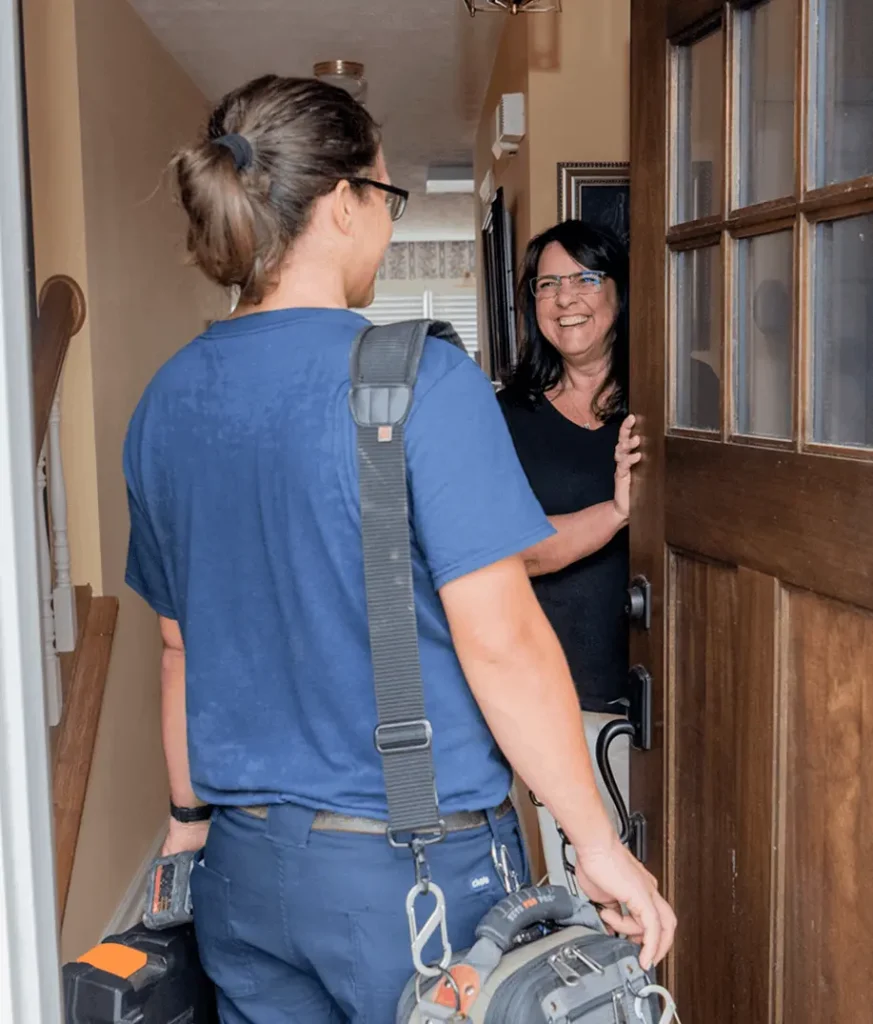
When the installation crew arrives, they may review the project with the homeowner, protect floors, and clear the route between the entrance and the equipment.
The technician should also confirm:
- The selected equipment
- Indoor and outdoor unit locations
- Thermostat placement
- Required electrical work
- Ductwork modifications
- Drainage arrangements
- Expected completion time
Preparing the work area helps the installation proceed efficiently and protects the surrounding property.
Removing the Existing Equipment
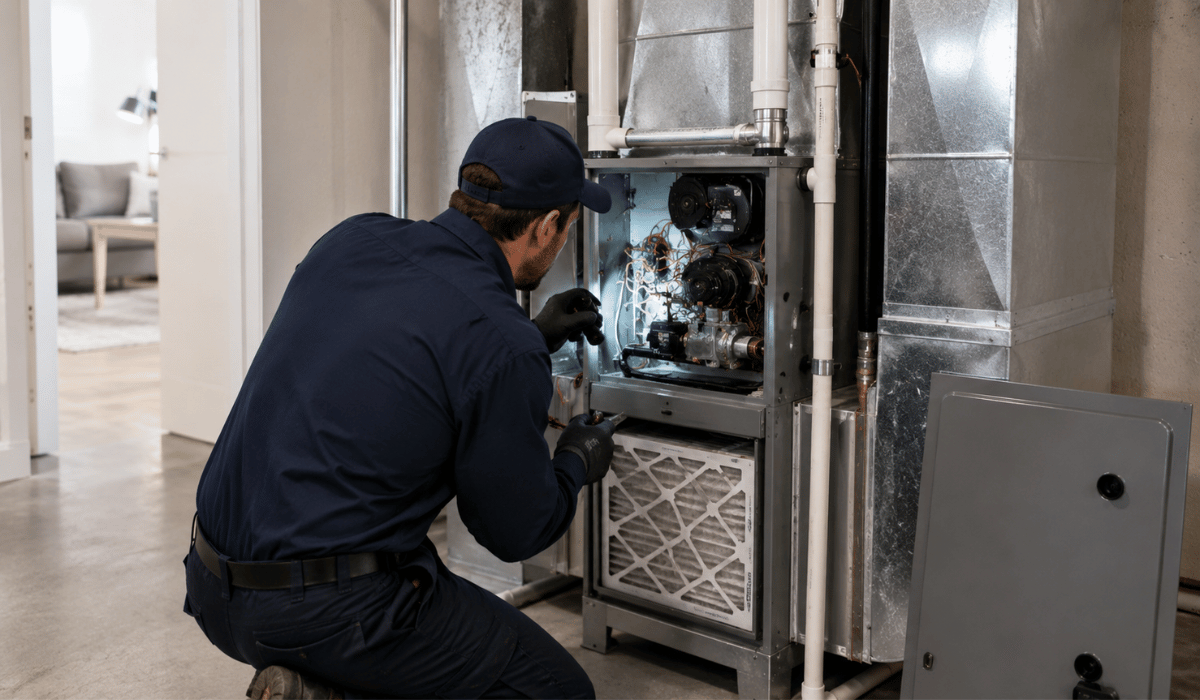
For a replacement project, the old indoor and outdoor units must be disconnected and removed.
The technician may also inspect the existing pad, electrical disconnect, refrigerant lines, condensate drain, and duct connections.
Refrigerants cannot simply be released into the air. The U.S. Environmental Protection Agency prohibits intentionally venting most refrigerants and their substitutes while maintaining, servicing, repairing, or disposing of air-conditioning equipment.
Proper recovery procedures require trained technicians and suitable equipment.
Removal may take longer when:
- The old unit is corroded.
- Connections are difficult to reach.
- The equipment is located in a confined attic or crawlspace.
- The outdoor unit is behind a narrow gate or landscaping.
- Previous modifications were made incorrectly.
- The existing refrigerant line cannot be reused.
Preparing the Installation Area
Once the old equipment is removed, the crew prepares the site for the new system. This may involve:
- Cleaning or replacing the outdoor equipment pad
- Inspecting or replacing the refrigerant line set
- Clearing the condensate drain
- Modifying the supply or return plenum
- Sealing duct connections
- Updating the electrical disconnect
- Installing a new thermostat cable
- Creating adequate clearance around the equipment
This stage can reveal hidden conditions that were not visible during the initial inspection.
Damaged ducts, poor drainage, outdated wiring, or an uneven outdoor pad may extend the timeline, but correcting these problems is important for reliable performance.
Installing the Indoor and Outdoor Units
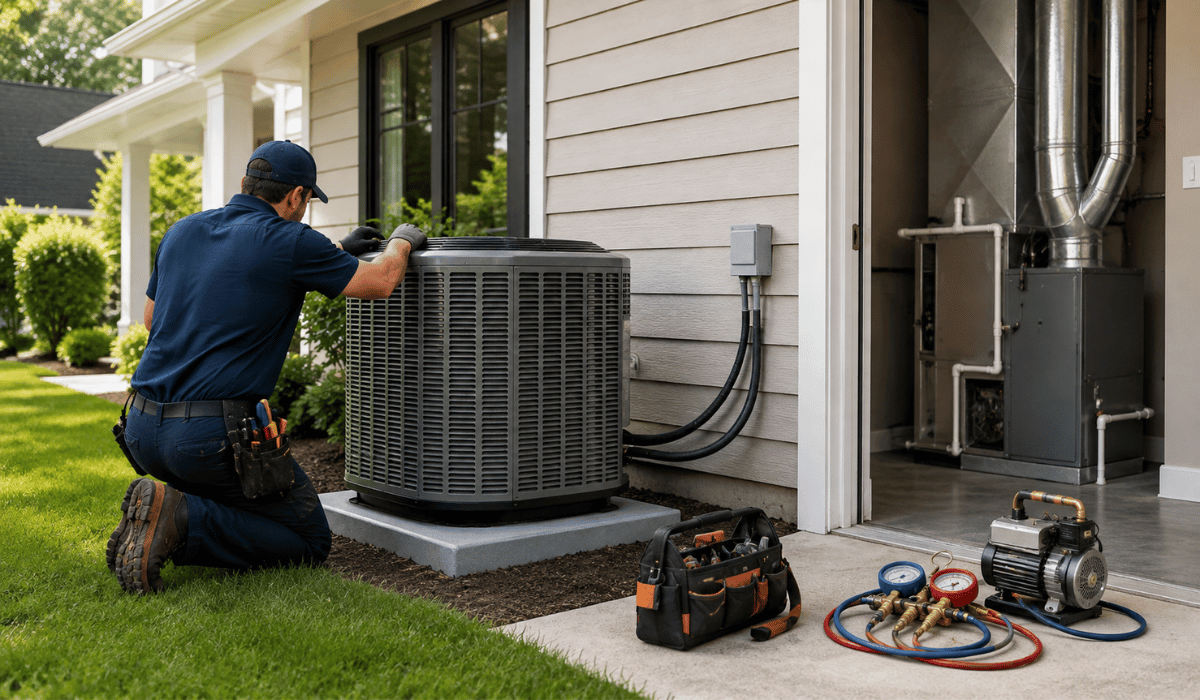
The crew positions the outdoor condenser on a stable, level base and installs the indoor coil or air handler in its designated location. The equipment must be connected to the ductwork, refrigerant lines, drainage system, thermostat, and electrical supply.
The indoor and outdoor components should also be properly matched.
Installing efficient equipment without correct sizing, airflow, or refrigerant charging can prevent the system from delivering its expected performance.
The U.S. Department of Energy identifies oversizing, improper refrigerant charging, and leaking ducts as installation problems that can reduce efficiency, affect comfort, and shorten equipment life.
Testing and Commissioning the System
Testing is one of the most important stages of AC installation. The crew should not leave immediately after the system starts producing cool air.
Final checks may include:
- Testing electrical connections
- Checking refrigerant line integrity
- Evacuating air and moisture from the refrigerant circuit
- Confirming refrigerant charge
- Measuring system airflow
- Testing thermostat operation
- Inspecting condensate drainage
- Checking supply and return temperatures
- Listening for unusual vibration or noise
- Confirming that rooms receive adequate airflow
According to Holtkamp HVAC & Plumbing, proper airflow, refrigerant charge, equipment sizing, and duct evaluation are central parts of a quality HVAC installation.
Skipping or rushing these checks may save time on installation day but create comfort, efficiency, or reliability problems later.
Completing the Homeowner Walkthrough
After testing, the technician should explain how to operate and care for the system. The walkthrough may cover:
- Thermostat settings
- Filter size and replacement schedule
- Basic maintenance needs
- Warranty information
- Unusual sounds or conditions to report
- Recommended temperature practices
- When to schedule professional maintenance
This final conversation allows the homeowner to ask questions and understand how to use the new system correctly.
What Can Make an AC Installation Take Longer?
Two homes with similar AC systems can have different installation timelines. Several factors can increase the complexity and duration of the job.
Condition of the Existing Ductwork
If the existing ducts are properly sized, sealed, insulated, and in good condition, they may need only minor adjustments. Installation can take longer if technicians find:
- Damaged, disconnected, or crushed ducts
- Significant air leaks or poor insulation
- Undersized supply or return ducts
- Poor airflow or improper balancing
- Mold, moisture, or contamination concerns
Electrical Upgrades
New AC equipment may require different electrical components than the old system. Updating breakers, wiring, disconnects, or other components can add time. Larger electrical changes may also require a qualified electrician.
Equipment Location and Accessibility
AC equipment in an easily accessible area is generally faster to replace.
Tight attics, crawlspaces, closets, fenced areas, or locations with limited access can slow down equipment removal and installation.
System Type and Configuration
Replacing an existing AC with a similar system is usually simpler than changing the system design. Additional time may be needed for:
- Heat pump conversions
- Multiple ductless zones
- New zoning controls
- Equipment relocation
- Complete heating and cooling system replacement
- Ductwork redesign
Unexpected Conditions
Removing old equipment can reveal problems such as corrosion, water damage, damaged wiring, drainage issues, or poorly completed previous work.
If this happens, the contractor should explain the issue and discuss any changes to the cost or timeline before proceeding.
Equipment and Part Availability
Installation can also be delayed if the required equipment, thermostat, electrical components, or replacement parts are unavailable.
Scheduling before peak summer demand may provide greater flexibility.
How to Prepare Your Suwanee Home for Installation Day
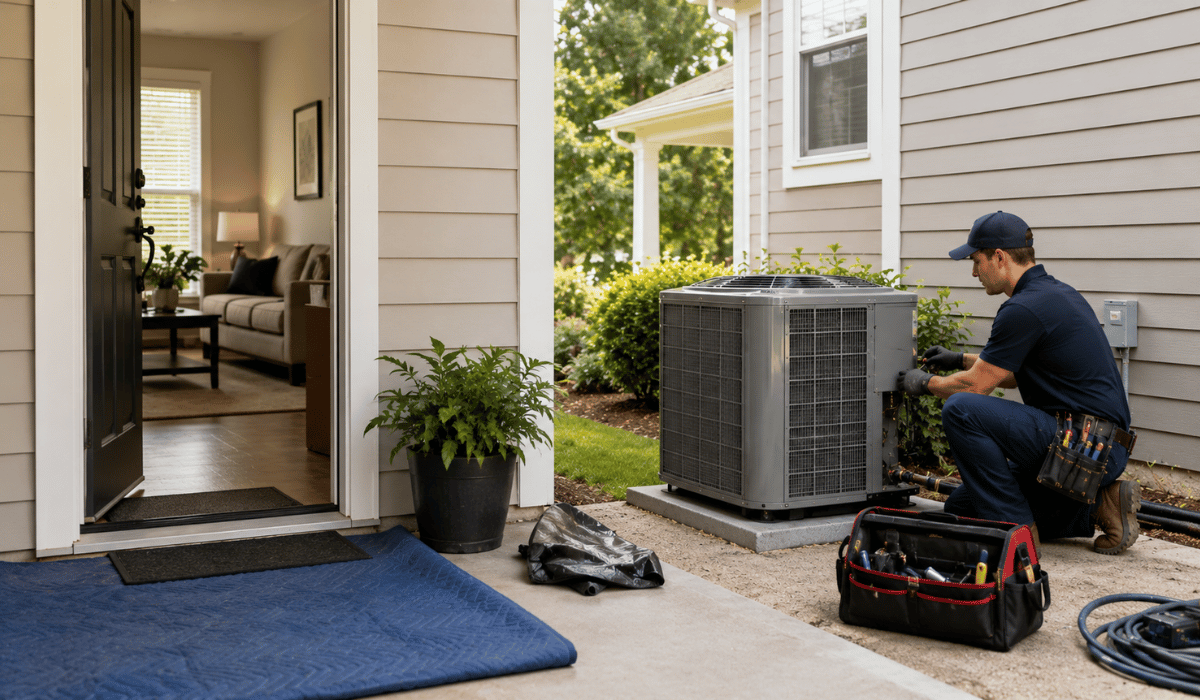
A little preparation can help prevent unnecessary delays.
Clear Access to the Equipment
Remove furniture, stored items, tools, and other obstacles around the indoor and outdoor units. Make sure attic, closet, or crawlspace access is clear.
Secure Pets
Keep pets in a secure area or arrange for them to stay elsewhere while technicians move between indoor and outdoor work areas.
Confirm Parking and Entry Details
Provide parking instructions, gate codes, and other access information before the crew arrives so equipment can be unloaded efficiently.
Ask About Cooling Downtime
Ask when the existing AC will be turned off and when the new system is expected to start operating. Make alternative arrangements if household members may be uncomfortable without cooling.
Review the Project Before Work Begins
Confirm the equipment, installation scope, expected timeline, thermostat, and any planned duct or electrical work with the technician before installation begins.
Why Proper Installation Matters More Than Speed
Finishing quickly should not be the main measure of a successful installation.
Correct sizing, component matching, sealed duct connections, proper airflow, accurate refrigerant charge, safe electrical work, and complete testing all affect system performance.
A rushed installation may contribute to:
- Uneven temperatures
- Frequent cycling
- High indoor humidity
- Unexpected energy use
- Excessive noise
- Drainage problems
- Premature component wear
- Reduced equipment life
For Suwanee homeowners, humidity control is particularly important during the cooling season.
An oversized or poorly configured system may cool the home rapidly but shut off before removing enough moisture from the indoor air.
Allowing technicians enough time to complete the work and test the system can help protect the investment.
Frequently Asked Questions
Will I need to leave my home during AC installation?
Homeowners can usually remain at home, although there will be periods of noise and regular movement between indoor and outdoor areas. Because cooling will be unavailable for part of the day, some households may prefer to make other arrangements during very hot weather.
Does new ductwork increase the installation time?
Installing or extensively modifying ductwork can add one or more days to the project, depending on the home’s layout, accessibility, and the amount of work required. Minor sealing or connection adjustments may be completed during the equipment replacement.
Does the old refrigerant line always need to be replaced?
Not necessarily. A technician must inspect the line for its size, length, condition, cleanliness, and compatibility with the new equipment and refrigerant. Replacement may be recommended when the existing line does not meet system requirements.
Why does the new air conditioner need a load calculation?
A load calculation estimates how much cooling the home requires based on factors such as size, insulation, windows, air leakage, orientation, and local climate. It helps prevent the comfort and efficiency problems that can result from choosing equipment that is too large or too small.
Can AC installation be completed during rain?
Light rain may not stop every part of the project, but thunderstorms, heavy rain, or unsafe outdoor conditions can cause delays. The contractor should determine whether installation can proceed safely without exposing equipment or electrical components to risk.