


When your air conditioner starts having problems, one of the biggest questions is whether you should repair the system or replace it entirely.
For many homeowners, it can be difficult to know which option makes the most sense.
Repair may be enough if the issue is minor and the system is still in good condition.
However, older units with frequent breakdowns, high energy bills, and declining performance may be better candidates for replacement.
The decision often depends on several factors, including the age of the system, the cost of the repair, how often the unit has needed service in the past, and whether the system is still cooling your home efficiently.
In some cases, a simple repair can restore comfort and extend the life of the system for several more years.
In other situations, continuing to repair an aging air conditioner may become more expensive over time.
Replacing the system can sometimes provide better long-term value through improved energy efficiency, lower repair costs, and more reliable cooling.
Understanding the differences between repair and replacement can help you make a more informed decision for your home and budget.
When AC Repair Makes Sense
In many cases, repairing your air conditioner is the most practical option. Minor problems can often be fixed without the need for a full system replacement.
AC repair may make sense if:
- Your system is less than 10 years old
- The repair is relatively inexpensive
- The problem is isolated to one part
- Your energy bills have remained stable
- The system has been properly maintained
- This is the first major repair you have needed
For example, issues like a clogged drain line, dirty coils, worn capacitor, faulty thermostat, or blower motor problem can often be repaired without replacing the entire unit.
If your system is still cooling effectively and the repair cost is reasonable, fixing the issue may help extend the life of the equipment for several more years.
Repair is often the better option when the problem is small and the rest of the system is still in good condition.
Homeowners should also consider how often the unit has needed service in the past.
If this is the first repair after several years of reliable performance, it is usually worth fixing rather than replacing the system.
If your system is still cooling effectively and the repair cost is reasonable, repairing the unit may help extend its life for several more years.
When AC Replacement Makes Sense
There are times when replacing the system is the better long-term investment.
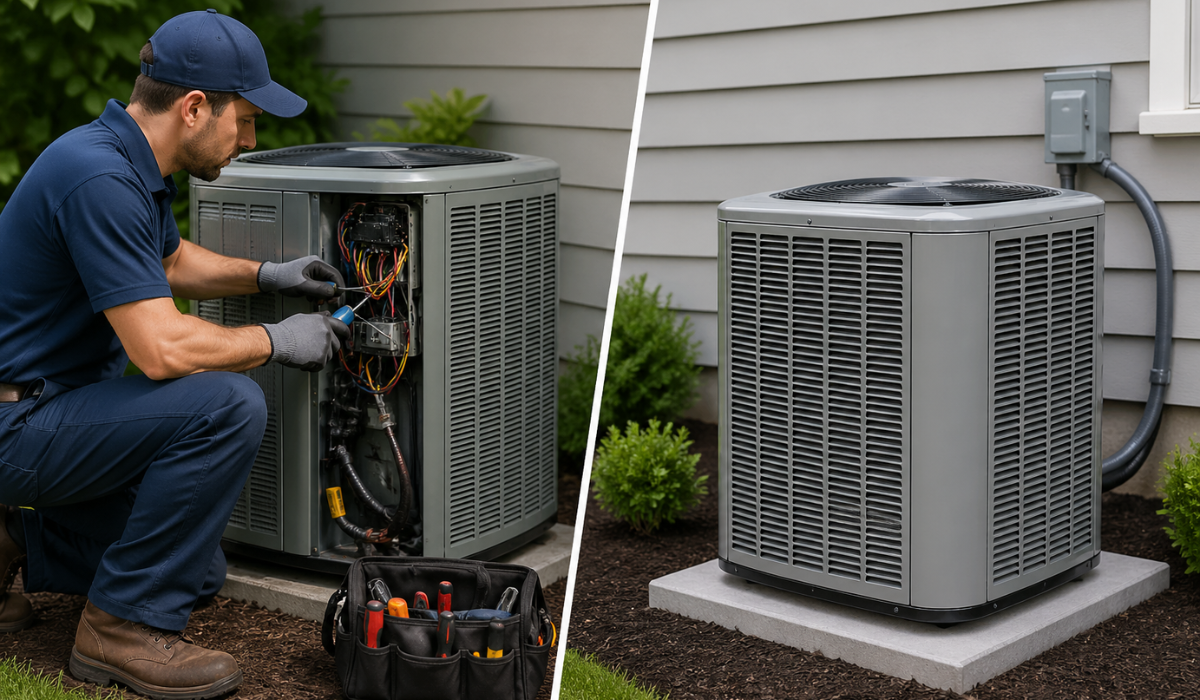
If your air conditioner is older and requires frequent service, continuing to repair it may become more expensive over time.
AC replacement may make sense if:
- Your system is more than 10 to 15 years old
- Repairs are becoming more frequent
- Cooling performance has declined
- Energy bills continue to rise
- The unit uses outdated refrigerant
- Major parts like the compressor or evaporator coil fail
- Repair costs are close to half the cost of a new system
An older system may continue running after repairs, but it may still struggle to cool your home efficiently.
In these cases, replacement can improve comfort, reduce energy costs, and lower the risk of future breakdowns.
Age and Efficiency Factors
The age of your AC system is one of the most important factors when deciding between repair and replacement.
Most air conditioners last around 10 to 15 years with proper maintenance. As systems get older, they naturally become less efficient and more likely to develop problems.
Older systems often use more electricity to produce the same level of cooling. They may also use outdated refrigerants that are harder and more expensive to replace.
Newer AC systems are designed to be much more energy efficient.
Replacing an aging unit may help lower utility bills and improve indoor comfort, especially during the hottest months of the year.
If your current system is near the end of its expected lifespan, replacement may provide better long-term value than repeated repairs.
Cost Considerations
Cost is one of the main reasons homeowners struggle with the repair versus replacement decision.
A repair usually has a lower upfront cost, which makes it appealing in the short term. However, repeated repairs can add up quickly if your system continues to have problems.
One common guideline is the “50 percent rule.” If the cost of the repair is close to half the cost of a new system, replacement is often the better option.
For example, spending several thousand dollars on a major repair for a system that is already 12 years old may not be the best long-term investment.
In many cases, putting that money toward a new system may provide better performance and fewer future repair costs.
Homeowners should also consider ongoing expenses like utility bills, maintenance costs, and the likelihood of future repairs when comparing options.
How Maintenance Affects AC Lifespan
Routine maintenance plays a major role in how long an air conditioner lasts.
Systems that receive regular tune-ups, filter changes, coil cleaning, and inspections often last longer and experience fewer major breakdowns.
Proper maintenance can also help improve efficiency and reduce wear on important parts.
On the other hand, systems that have not been maintained are more likely to develop problems earlier. Dirty filters, clogged coils, refrigerant issues, and airflow restrictions can place extra strain on the equipment and shorten its lifespan.
If your system has been well maintained and only has a minor issue, repair may be enough. However, if maintenance has been neglected and the unit has multiple problems, replacement may be the better option.
Questions to Ask Before Deciding
Before choosing between AC repair and AC replacement, it can help to ask a few important questions:
- How old is the system?
- How often does it need repairs?
- Is the system still cooling effectively?
- Have energy bills increased?
- How much will the repair cost?
- Has the system been properly maintained?
- Does the unit use outdated refrigerant?
- Are there signs of major component failure?
The answers to these questions can help you understand whether a repair is likely to solve the problem or if replacement may provide better long-term value.
Benefits of Replacing an Older AC System
Replacing an older air conditioner can provide several benefits beyond simply restoring cooling.
Some of the biggest advantages of a new system include:
- Lower monthly energy bills
- More reliable cooling
- Better airflow and indoor comfort
- Quieter operation
- Fewer repair problems
- Improved humidity control
- Better indoor air quality
- New warranty protection
For homeowners dealing with repeated repairs or rising energy costs, a new AC system can often provide peace of mind and better long-term performance.
Repair and Replacement Support for Homeowners
Choosing between repair and replacement is not always easy. Every home and AC system is different, which is why a professional inspection is important.
An HVAC technician can evaluate the age of the system, inspect major components, identify current problems, and provide recommendations based on the condition of the equipment.
For homeowners in Suwanee, Buford, Lawrenceville, Sugar Hill, Duluth, and nearby areas, professional guidance can help make the decision easier and prevent unnecessary costs.
FAQs
How do I know if my AC should be repaired or replaced?
If your system is newer and the repair is minor, repair is often the best option. If the system is older, requires frequent service, or has a major component failure, replacement may make more sense. A professional inspection can help determine the overall condition of the equipment and whether continued repairs are worth the cost.
What is the average lifespan of an air conditioner?
Most air conditioners last between 10 and 15 years with proper maintenance. Systems that receive regular service may last longer, while neglected systems may fail sooner. Factors like climate, frequency of use, and how well the system has been maintained can all affect its lifespan.
Is it worth repairing a 15-year-old air conditioner?
In many cases, replacing a 15-year-old AC system is more cost effective than continuing to repair it. Older systems are usually less efficient and more likely to need future repairs. If repair costs are high and the unit is no longer cooling effectively, replacement may be the better long-term investment.
Does regular maintenance help extend AC lifespan?
Yes. Routine maintenance can help keep the system running efficiently, reduce wear on important parts, and lower the risk of major breakdowns over time. Regular tune-ups can also help identify small issues before they turn into larger and more expensive repairs.
What are the benefits of replacing an older AC system?
A new AC system may provide better energy efficiency, lower utility bills, improved comfort, quieter performance, and fewer repair problems. Many newer systems also offer improved airflow, better humidity control, and more advanced thermostat features for better indoor comfort.