


A reliable water heater supports everyday tasks such as bathing, laundry, and cleaning.
Problems often go unnoticed until the water turns cold, unusual noises appear, or leaks develop.
Common causes include sediment buildup, worn parts, thermostat failure, plumbing leaks, and power or gas issues.
Recognizing the warning signs can help you decide whether the system needs a simple adjustment, professional repair, or replacement.
9 Common Water Heater Problems Homeowners Should Know
The Water Heater Produces No Hot Water
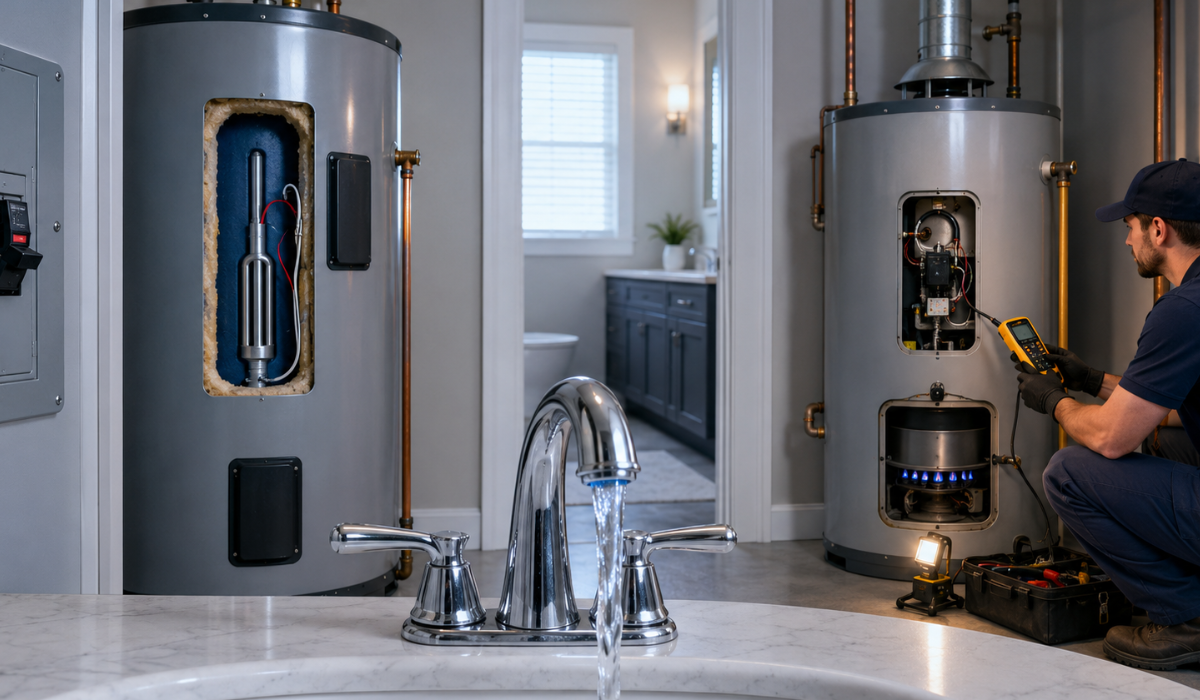
A complete loss of hot water may be caused by electrical or gas-related issues.
For electric units, check the circuit breaker and reset it once if safe.
If it trips again, call a professional, as the problem may involve the heating element, thermostat, or wiring.
Gas units may have a pilot light, ignition, burner, or gas supply issue. Follow the manufacturer’s instructions and have a plumber inspect the system if the water remains cold.
Hot Water Runs Out Too Quickly
A water heater may run out of hot water due to high demand, an undersized tank, sediment buildup, or a failed heating element.
Spacing out showers and appliance use may help temporarily, but frequent shortages during normal use may require professional service.
Sediment and mineral scale can also reduce heating efficiency.
A plumber can determine whether the system needs flushing, descaling, repairs, or replacement.
Water Is Lukewarm or Changes Temperature
Lukewarm or inconsistent water may result from a faulty thermostat, heating element, dip tube, sediment buildup, or plumbing issue.
If only one fixture is affected, the problem may be with its cartridge or mixing valve.
If the entire home is affected, the water heater may be the cause. Avoid increasing the thermostat repeatedly and have a plumber inspect the system if the problem continues.
Water Is Too Hot
Water that is too hot may indicate a high thermostat setting or a faulty thermostat. Check the setting and follow the manufacturer’s recommended temperature.
If the water remains dangerously hot despite a normal setting, turn off the system and arrange professional repair to reduce the risk of burns and damage.
Water Is Leaking Around the Heater
A water heater leak may come from a loose connection, relief valve, drain valve, condensation, or a corroded tank.
If water is spreading, safely shut off the water supply and electrical power for an electric unit.
While minor leaks may be repairable, a leaking or corroded tank usually requires replacement. Prompt action can help prevent further water damage.
The Pressure Relief Valve Is Dripping
The temperature and pressure relief valve, also known as the T&P or TPR valve, is an important safety component. It releases water if the pressure or temperature inside the tank becomes too high.
A dripping valve may be caused by excessive water pressure, thermal expansion, a high thermostat setting, debris inside the valve, or a defective valve.
Never cap, plug, or block the discharge pipe to stop the leak. The relief valve must remain capable of releasing pressure safely.
A plumber should inspect the water pressure, expansion control, thermostat operation, valve condition, and installation.
If the valve releases hot water continuously or forcefully, shut down the heater when safe and request urgent service.
The Tank Makes Popping or Rumbling Sounds
Popping, banging, or rumbling sounds commonly develop when sediment collects at the bottom of a storage water heater.
Water trapped beneath the mineral deposits heats and moves through the buildup, creating noise.
Sediment can reduce heat transfer, increase heating time, and decrease the amount of available hot water. The problem may develop more quickly in homes with mineral-heavy water.
Flushing the tank may help when it is performed according to the manufacturer’s instructions.
However, draining an older or poorly maintained tank can sometimes expose a weak drain valve or existing corrosion.
Homeowners who are unsure about the age or condition of the system should have it inspected before attempting maintenance. Whistling, sizzling, or unusual ignition sounds may have different causes and should also be diagnosed professionally.
Hot Water Looks Rusty or Brown
Discolored hot water may come from the water heater, household pipes, or the public water supply.
Compare the hot and cold water at several fixtures. If both are discolored, the issue may be related to the incoming water supply or plumbing system.
If only the hot water appears rusty or brown, sediment or corrosion inside the water heater is more likely.
Storage tanks normally contain an anode rod designed to corrode before the steel tank does. Once the rod is depleted, the tank can become more vulnerable to rust.
Replacing the anode rod at the correct time may help protect a tank that is still structurally sound.
Persistent rusty water from an older unit may indicate internal deterioration and the need for water heater replacement.
Hot Water Has a Bad Odor
A rotten-egg smell in hot water may be related to bacteria inside the tank, the home’s water chemistry, or a reaction involving the anode rod.
Check whether the odor is present in both the hot and cold water. If both smell unusual, the source may be the incoming water supply or another part of the plumbing system.
If the odor affects only the hot water, the heater may need cleaning, disinfection, or anode-rod evaluation.
Do not pour chemicals into the tank without professional guidance. The correct solution depends on the water source, equipment type, anode material, temperature, and condition of the plumbing.
A fuel-gas smell is different from a hot-water odor. If you suspect a gas leak, leave the property immediately and contact the gas utility.
Hot-Water Pressure Is Lower Than Normal
Low pressure on the hot-water side may be caused by mineral buildup, sediment, a partially closed valve, clogged fixture, or restricted pipe.
Compare the hot and cold pressure at several faucets. If only one fixture is affected, the problem may be a clogged aerator or showerhead.
Cleaning or replacing that component may restore normal flow.
If cold-water pressure is normal but hot-water pressure is weak throughout the home, the restriction may be inside the hot-water piping or near the heater connections.
Corroded pipes, damaged valves, and heavy mineral buildup generally require professional repair.
Avoid increasing the home’s water pressure to compensate for a restriction, as excessive pressure can stress pipes, valves, and plumbing fixtures.
Should You Repair or Replace the Water Heater?
Water heater repair is often reasonable when the tank is structurally sound and the problem involves a thermostat, heating element, ignition component, connection, or replaceable valve.
Replacement may be more practical when:
- The tank itself is leaking
- Corrosion is extensive
- Hot-water problems keep returning
- Repair costs are becoming excessive
- The unit cannot meet normal household demand
- Replacement parts are difficult to obtain
Age is important, but it should not be the only deciding factor.
A plumber can evaluate the tank condition, repair cost, energy use, household needs, and installation quality before making a recommendation.
This helps homeowners avoid replacing a repairable unit too early or continuing to invest in a water heater with serious structural damage.
How to Prevent Future Water Heater Problems
Inspect the area around the water heater periodically for moisture, rust, loose connections, and unusual sounds.
Keep the surrounding space clear and follow the maintenance schedule provided by the manufacturer.
Storage water heaters may need periodic flushing and anode-rod inspection, depending on the equipment and local water conditions. Tankless systems may require inlet-filter cleaning and descaling.
Heat pump water heaters may also require air-filter and condensate-line maintenance.
Professional inspections can help identify worn components, small leaks, venting concerns, and developing corrosion before they lead to a complete system failure.
Conclusion
Water heater problems often start with warning signs like inconsistent temperatures, unusual noises, discolored water, or minor leaks.
Addressing them early can help prevent sudden breakdowns, property damage, and costly repairs.
While basic checks may be safe, electrical, gas, pressure, and tank issues require professional attention.
Holtkamp HVAC & Plumbing provides water heater repair and replacement services in Suwanee, GA, and nearby areas.
Take the Right Next Step
Common water heater problems can range from a simple interruption in power to a leaking tank that requires replacement.
The correct solution depends on the source of the problem, not only the visible symptom.
Holtkamp HVAC & Plumbing provides professional water heater inspection, repair, and replacement for homeowners in Suwanee, GA, and nearby communities.
Addressing warning signs early can help restore dependable hot water and reduce the risk of additional damage.
Frequently Asked Questions
What is the most common problem with water heaters?
Sediment buildup is one of the most common storage water heater problems, especially in areas with mineral-heavy water. It can contribute to unusual noises, slower heating, reduced capacity, and added strain on heating components. Failed elements, thermostat problems, leaks, and ignition issues are also common.
How do you solve a water heater problem?
Begin by identifying the symptom and checking safe basics, such as the breaker, temperature setting, visible leaks, and whether every fixture is affected. Do not open electrical compartments, repair gas components, or block the relief valve. Recurring, internal, gas-related, electrical, or leaking problems should be diagnosed by a qualified plumber.
What are the first signs of a water heater going bad?
Early warning signs include inconsistent water temperature, a reduced hot-water supply, longer heating times, rumbling sounds, rusty water, moisture around the tank, and frequent repairs. Water leaking through the tank body or base may indicate internal corrosion and the need for replacement.
What is the first thing to check when there is no hot water?
First, check whether the water heater has power or fuel. For an electric unit, look for a tripped circuit breaker. For a gas unit, check the pilot or status indicator without taking apart the burner. If the breaker trips again, the pilot will not remain lit, or you notice leaking or burning, call a professional.