



If your power bill jumps every summer and you’re not sure why, the answer often isn’t your thermostat setting, it’s your air conditioner itself.
A neglected AC unit has to work significantly harder to cool the same space, and that extra strain shows up directly on your utility bill.
The good news: this is one of the most fixable causes of a high power bill, and it doesn’t require a new system, just a properly maintained one.
Here’s how timely AC maintenance actually lowers your bills, what a real tune-up should include, and how to find the right AC maintenance company near you in Georgia.
Why a Neglected AC Drives Up Your Power Bill
Air conditioners lose efficiency gradually, which is exactly why the problem often goes unnoticed until the bill arrives.
Over time, dirt and dust build up on filters and coils, refrigerant levels can drop, and components wear down.
None of this causes the system to stop working outright, it just makes the system work harder to produce the same amount of cooling.
That extra effort translates directly into more electricity used per degree of cooling delivered.
A well-maintained system, by contrast, moves heat out of your home more efficiently, using less energy to reach and hold your thermostat setting.
This is the core reason routine maintenance and lower power bills are so closely connected, it’s not a marketing claim, it’s basic mechanical efficiency.
How Timely AC Maintenance Actually Reduces Power Bills
Clean filters and coils restore airflow. When filters and coils are clogged with dust and debris, airflow drops and the system has to run longer to cool the same space.
Regular cleaning restores that airflow and lets the unit cool efficiently again.
Correct refrigerant levels matter more than most people realize.
A system with low refrigerant has to run longer cycles to reach the target temperature, which increases energy use even though nothing looks obviously wrong from the outside.
Catching small issues early prevents bigger inefficiencies.
A minor electrical or mechanical issue, left unaddressed, doesn’t just risk a breakdown, it often causes the system to run less efficiently in the meantime, quietly inflating your bill for months before it becomes an obvious failure.
Consistent maintenance keeps the whole system balanced. Thermostat calibration, ductwork condition, and airflow all affect how efficiently cool air actually reaches your rooms.
A tune-up evaluates the system as a whole, not just the outdoor unit, which is why maintenance tends to have a bigger impact on your bill than most homeowners expect.
Put together, these are the same reasons industry data consistently shows well-maintained systems using meaningfully less energy than neglected ones, and why regular maintenance is considered one of the most reliable ways to reduce a high summer power bill without replacing the system.
Signs Your AC Needs Maintenance Now
Your air conditioner may not stop working suddenly. In many cases, it gives you warning signs that its performance is declining and that maintenance is needed.
Recognizing these symptoms early can help prevent minor issues from turning into expensive repairs or complete system breakdowns.
Watch for these common signs that your AC system may be running less efficiently than it should:
Warm or Weak Airflow From Vents
If the air coming from your vents feels warmer than usual or the airflow seems weaker, there could be an issue with the air filter, blower motor, ductwork, or refrigerant levels.
A clogged filter can restrict airflow, while other mechanical problems may prevent your system from distributing cool air effectively.
Rising Energy Bills Without Increased Usage
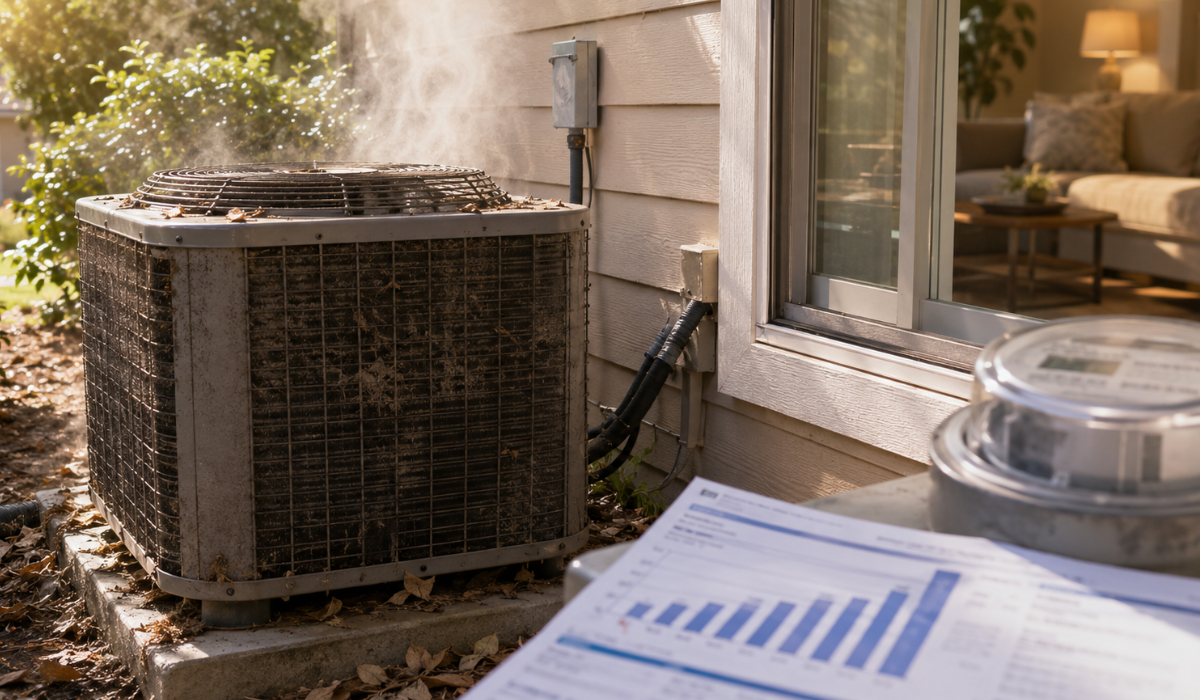
An unexpected increase in your electricity bills can indicate that your AC is working harder than necessary to maintain the desired indoor temperature.
Dirty coils, clogged filters, low refrigerant, or aging components can reduce efficiency and force the system to run for longer periods.
Strange Noises, Unusual Odors, or Moisture Around the Unit
Banging, grinding, squealing, rattling, or other unusual sounds should not be ignored.
Similarly, musty odors may indicate mold or excess moisture, while burning smells could signal an electrical problem.
Water pooling around the indoor or outdoor unit may also point to a clogged condensate drain or another issue that requires professional attention.
The System Runs Constantly but Doesn’t Reach the Set Temperature
If your AC runs continuously but your home still feels warm, the system may be struggling to cool the space efficiently.
Possible causes include dirty components, inadequate airflow, refrigerant problems, thermostat issues, or an AC system that is no longer properly sized for the home.
Uneven Cooling From Room to Room
Some rooms being noticeably warmer or colder than others can indicate airflow restrictions, ductwork problems, insulation issues, or an improperly balanced system.
Regular maintenance can help identify these problems before they significantly affect indoor comfort.
Frequent Short Cycling
If your AC repeatedly turns on and off in short intervals, it may be experiencing a problem with the thermostat, airflow, refrigerant, or other components.
Short cycling can increase energy consumption and place unnecessary stress on the compressor, potentially shortening the system’s lifespan.
Poor Indoor Air Quality
An increase in dust, unpleasant odors, or excessive indoor humidity may also indicate that your AC needs attention.
Dirty filters and neglected components can affect air circulation and indoor comfort, while drainage or humidity-control problems may contribute to moisture-related issues.
If any of these signs sound familiar, it is better to schedule an AC inspection or maintenance service sooner rather than later.
Continuing to operate an inefficient system can increase energy consumption and allow small problems to become more serious.
Routine professional maintenance can help improve system performance, maintain comfortable indoor temperatures, and potentially extend the life of your AC.
What a Professional AC Tune-Up Should Include
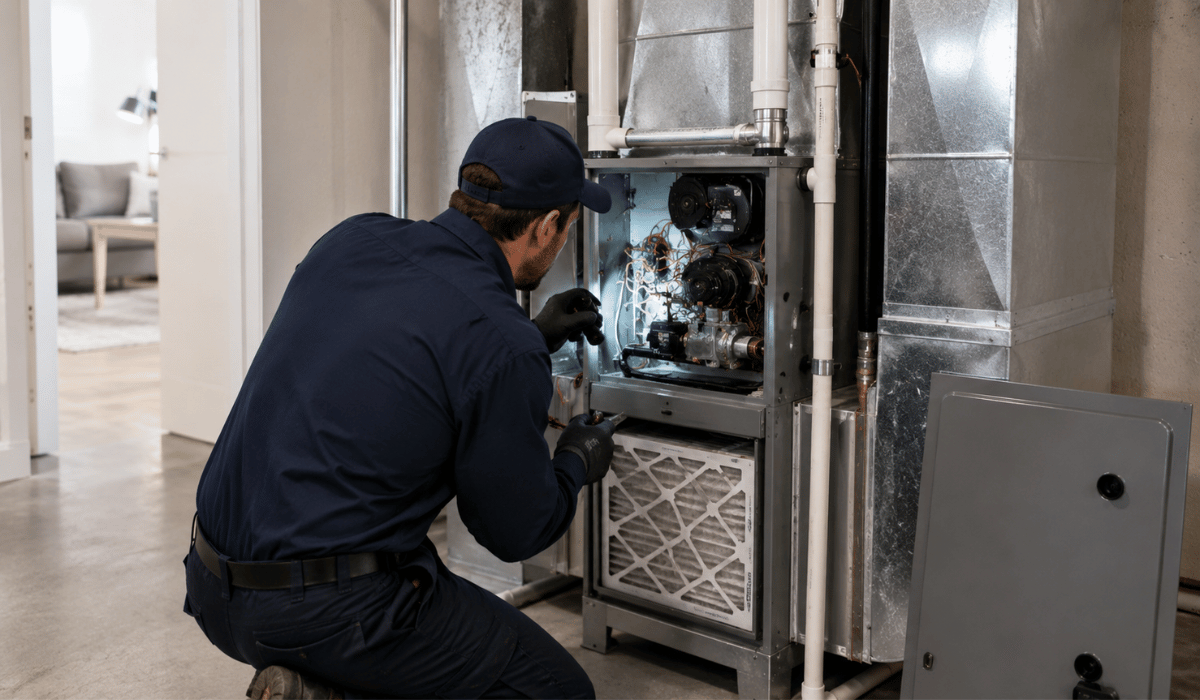
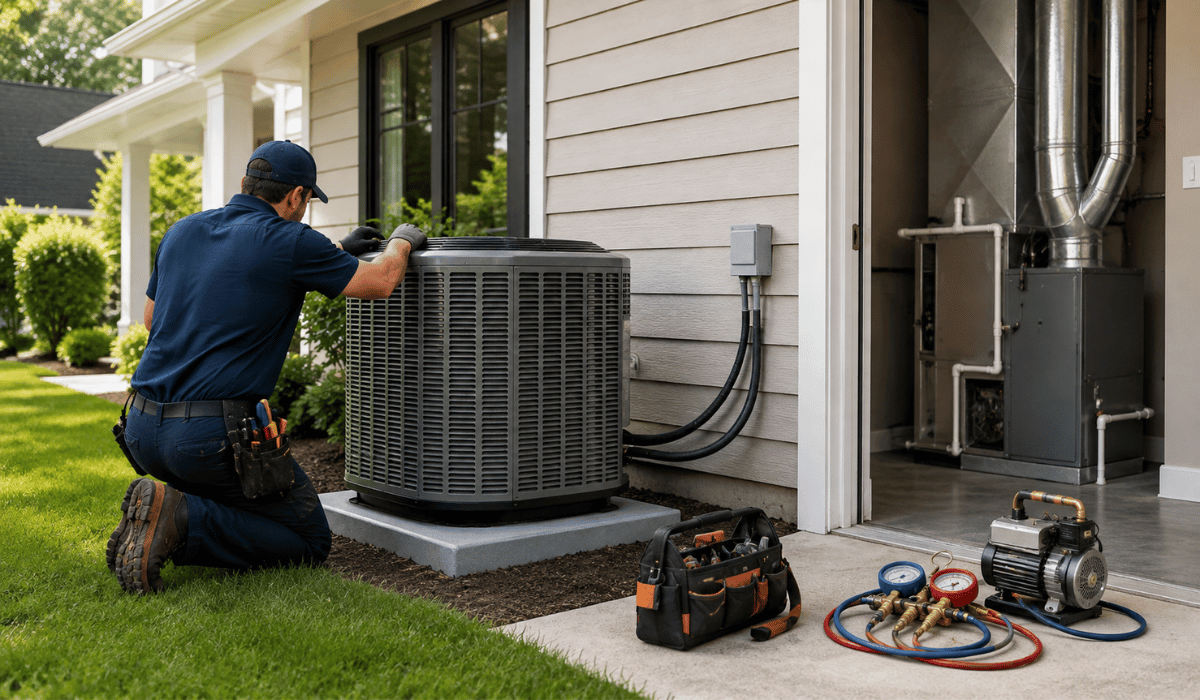
Not all “maintenance visits” are equal. A thorough AC tune-up should cover:
- Cleaning or replacing air filters
- Cleaning evaporator and condenser coils
- Checking refrigerant charge and pressure
- Inspecting electrical connections and components
- Testing thermostat accuracy
- Checking airflow and ductwork condition
- Lubricating moving parts
A tune-up that skips several of these is unlikely to deliver the full efficiency benefit, which is worth asking about directly when comparing providers.
How to Choose the Right AC Maintenance Company Near You in GA
Georgia’s long, hot, and humid cooling season can put significant strain on air conditioning systems.
Regular maintenance helps your AC operate efficiently, maintain consistent indoor comfort, and reduce the risk of unexpected breakdowns during the hottest months of the year.
When you schedule AC maintenance with our team, you can expect:
Licensed and Insured Service
Our professionals are committed to providing reliable AC maintenance backed by proper licensing and insurance. This gives homeowners greater confidence that their system is being serviced safely and professionally.
Thorough AC Tune-Ups
We don’t simply take a quick look at your system.
Our maintenance service includes a detailed inspection of essential components to identify potential issues, improve system performance, and help your AC operate more efficiently.
Local Experience
We understand the demands that Georgia’s heat and humidity can place on air conditioning systems.
Our local experience allows us to identify common performance concerns and provide maintenance suited to the needs of homes in the area.
Reliable, Professional Service
We focus on providing dependable service and a positive customer experience. From routine inspections to identifying potential problems, our team works carefully to help keep your AC system running smoothly.
Clear and Transparent Pricing
We believe homeowners should understand the services they are receiving.
Our team provides clear information about recommended maintenance and any additional work that may be needed, helping you make informed decisions about your AC system.
Don’t wait until your AC stops working on the hottest day of the year. Schedule professional AC maintenance with our team to help keep your system performing reliably throughout Georgia’s demanding cooling season.
Why Timing Matters in Georgia
Georgia’s cooling season runs long, which means small inefficiencies have more months to add up compared to regions with shorter summers.
Scheduling maintenance before the peak summer heat arrives, rather than after a problem shows up, gives your system the best chance to run efficiently through the months it’s under the most strain.
Many providers recommend a seasonal check before summer, and a second check afterward, to catch anything that developed during peak usage.
The Bottom Line
A high power bill during a hot Georgia summer usually isn’t a sign that you need a new AC system, it’s often a sign that your current one isn’t running as efficiently as it could.
Timely maintenance addresses the root cause directly: restoring airflow, correcting refrigerant levels, and catching small issues before they become expensive ones.
It’s a lower-cost, lower-hassle fix than most homeowners assume, and it pays for itself through the energy savings alone.
Frequently Asked Questions
How much can AC maintenance actually reduce my power bill?
The exact amount varies by system age and condition, but a well-maintained unit consistently uses less energy than a neglected one to produce the same cooling, since it doesn’t have to work as hard. The worse the current neglect, the more noticeable the improvement after a proper tune-up.
How often should I get my AC serviced in Georgia?
Most providers recommend servicing your system at least once a year, ideally before the summer cooling season begins. Given Georgia’s long, humid summers, a second check partway through the season can catch issues that developed under heavy use.
What’s included in a typical AC maintenance visit?
A thorough visit typically includes filter cleaning or replacement, coil cleaning, refrigerant level checks, electrical inspection, thermostat testing, and an airflow/ductwork check. Ask your provider directly if their visit covers all of these.
Can I do AC maintenance myself, or do I need a professional?
Homeowners can handle basic tasks like replacing air filters regularly and keeping the outdoor unit clear of debris. Checking refrigerant levels, electrical components, and internal coils requires professional tools and training, and attempting these without proper equipment can cause more harm than good.
Will regular maintenance actually prevent AC breakdowns?
Yes, in most cases. Routine maintenance catches worn parts, electrical issues, and airflow problems before they cause a full system failure, which is typically far less expensive than an emergency repair or mid-summer breakdown.
Does AC maintenance improve indoor air quality too?
Yes, clean filters and coils reduce the dust, allergens, and debris circulating through your home’s air, which matters especially for households with children, allergy sufferers, or anyone with respiratory sensitivities.
Is it worth paying for a maintenance plan instead of a one-time visit?
For most homeowners, yes. A maintenance plan typically ensures the system gets serviced on schedule, before small issues become expensive ones, rather than relying on remembering to book a visit each year.