


HVAC air purifier installation may be worth the investment if you want to reduce airborne dust, pollen, pet dander, smoke particles, or certain biological contaminants throughout your home.
Its effectiveness depends on the pollutants involved, the technology selected, HVAC airflow, and regular maintenance.
However, a purifier cannot remove particles that have already settled, correct poor ventilation, or resolve moisture problems.
Understanding these limits can help you decide whether installation is right for your home.
What Is an HVAC Air Purifier?
An HVAC air purifier is installed within or near a central HVAC system to clean air as it moves through the ductwork. Unlike a portable unit, it can treat air across multiple rooms.
Systems may use media filters, activated carbon, UV light, or electronic technology.
Because each option targets different pollutants, the right choice depends on the air-quality problem you want to address.
How Does a Whole-Home Air Purifier Work?
A whole-home air purifier treats air as it moves through the HVAC system. It may use a filter to capture airborne particles, carbon media to reduce certain odors, or UV light to control biological growth on HVAC surfaces.
It only treats pollutants that reach the system, so regular cleaning and moisture control are still necessary.
What Can an HVAC Air Purifier Remove?
Depending on its technology, an HVAC air purifier may capture airborne dust, pollen, pet dander, mold spores, smoke particles, and some bacteria- or virus-containing particles.
The EPA explains that air filtration can reduce indoor pollutants but cannot remove them all. Regular cleaning, ventilation, and control of moisture or pollution sources are still necessary.
Types of HVAC Air Purifiers
The best system is the one designed for the pollutant you’re concerned about and compatible with your HVAC equipment.
No single technology handles every indoor air quality issue equally well.
Media Air Cleaners
A media air cleaner uses a deep, pleated filter installed in a cabinet connected to the duct system.
The larger filter area can capture more particles while allowing air to pass through more easily than it might through a thin, tightly packed filter.
Media filters are commonly used to reduce dust, pollen, pet dander, and other particles. They don’t require electricity, but they do need regular replacement.
Filter efficiency is often described with a Minimum Efficiency Reporting Value, or MERV rating. The rating compares how well a filter captures particles between 0.3 and 10 microns.
A higher number generally indicates better particle capture within the sizes covered by the rating.
The EPA recommends a MERV 13 filter, or the highest efficiency filter the system’s fan and filter slot can accommodate. That last part matters. Installing a highly restrictive filter without checking the system can reduce airflow and affect heating or cooling performance.
Activated Carbon Filters
Activated carbon is used to adsorb certain odors and gaseous pollutants. It may be helpful in homes affected by cooking smells, tobacco smoke, pet odors, or some chemical vapors.
Carbon media shouldn’t be confused with a particle filter. Its main purpose is gas and odor control, although some products combine carbon with mechanical filtration.
The amount of carbon matters. A thin carbon-coated pad may have limited capacity, while a system containing a substantial amount of carbon media may work longer.
Carbon eventually becomes saturated and must be replaced.
No carbon filter removes every gas found indoors.
If a strong odor comes from a gas leak, sewage problem, chemical spill, or active mold growth, locate the source instead of relying on filtration to cover it.
UV Air Purifiers
UV air purifiers are commonly installed near the indoor coil to help control biological growth on HVAC surfaces.
Their effectiveness depends on correct placement, airflow, and regular cleaning and lamp replacement. UV systems should be used alongside proper air filtration.
Electronic Air Cleaners
Electronic air cleaners use electrical charges to capture airborne particles on collection plates.
These plates require regular cleaning to remain effective. Before choosing a system, ask whether it produces ozone and select an option designed for safe indoor use.
Signs Your Home May Benefit From an Air Purifier
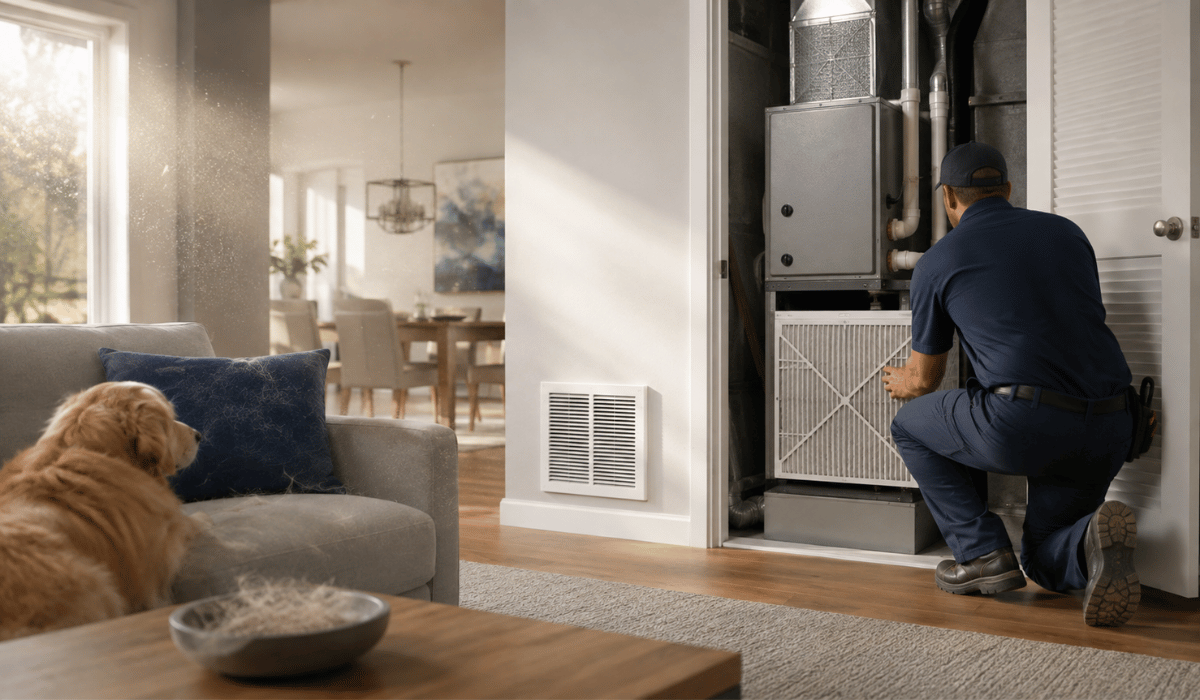
You may want to discuss HVAC air purifier installation if you frequently notice dust returning soon after cleaning or family members experience irritation that appears worse indoors.
Other reasons to consider a whole-home system include:
- Pets that shed or produce dander
- Frequent cooking odors
- Seasonal pollen entering the home
- Smoke exposure from outdoors
- Recent renovation or construction dust
- A family member sensitive to airborne particles
- Visible buildup on the HVAC filter
- A desire to filter multiple rooms with one system
These signs don’t prove that an air purifier is required. They simply suggest that it may be useful to inspect the home and identify the main pollutant sources.
For example, rapid dust buildup could result from a low-efficiency filter, but it could also point to return-duct leaks, gaps around the filter rack, damaged ductwork, or dust entering through an unsealed crawlspace.
Installing a purifier without investigating those possibilities may treat only part of the problem.
Whole-Home Air Purifier vs. Portable Air Purifier
A whole-home system and a portable purifier serve different needs.
A portable purifier can be a practical choice when you need filtration in one bedroom, office, nursery, or living area.
It may cost less initially and doesn’t require modifications to the HVAC system. It can also operate independently when the central system’s blower is off.
The drawback is limited coverage. Cleaning several rooms may require multiple units, each with its own filter, noise level, energy use, and maintenance schedule.
A whole-home purifier treats air moving through the central duct system. It stays out of the living area and usually operates quietly. Maintenance is concentrated in one location.
Its performance is linked to HVAC operation. If the fan runs only occasionally, less air passes through the purifier.
Some systems can be configured for longer circulation periods, but added fan operation uses electricity and should be discussed during installation.
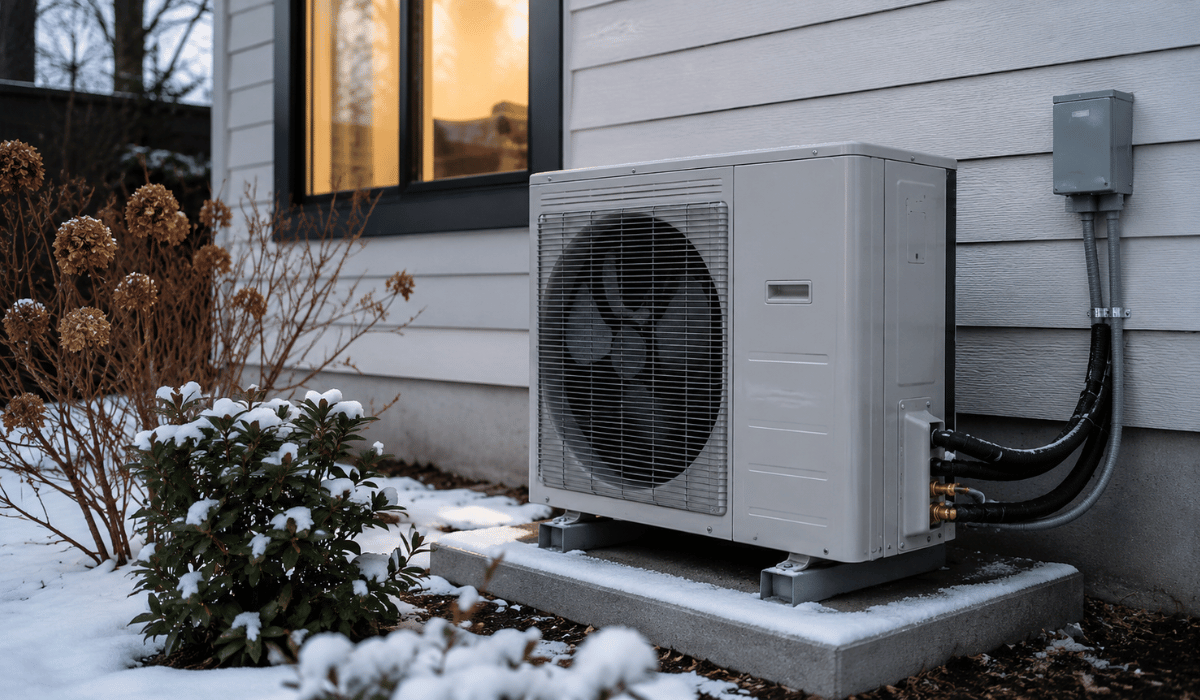
Homes with multiple ductless mini-splits may not have a central return duct where a conventional whole-home purifier can be installed.
Portable units or purification accessories designed for ductless equipment may make more sense in that situation.
Why Professional Installation Matters
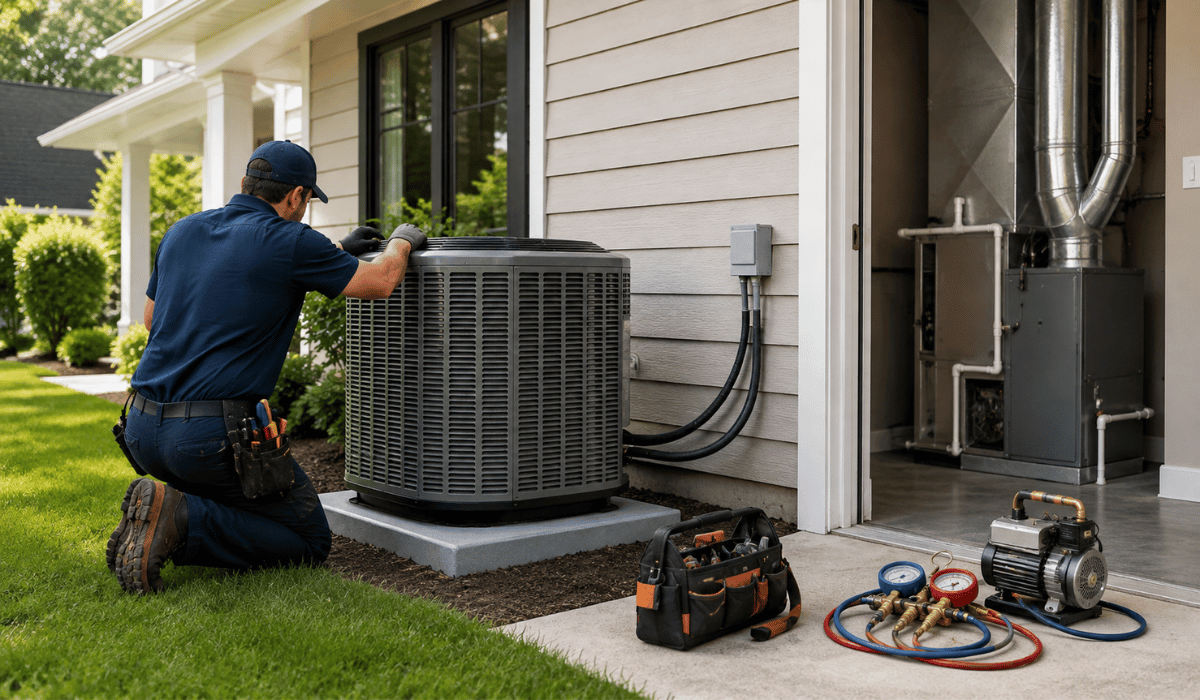
An HVAC air purifier must fit the ductwork, remain accessible for maintenance, and operate without restricting airflow.
A technician should evaluate the blower capacity, filter size, duct configuration, static pressure, and electrical requirements before installation.
Incorrect sizing or an overly restrictive filter can reduce airflow and affect HVAC performance. A qualified HVAC company can recommend an appropriate filtration level for your system.
What Happens During HVAC Air Purifier Installation?
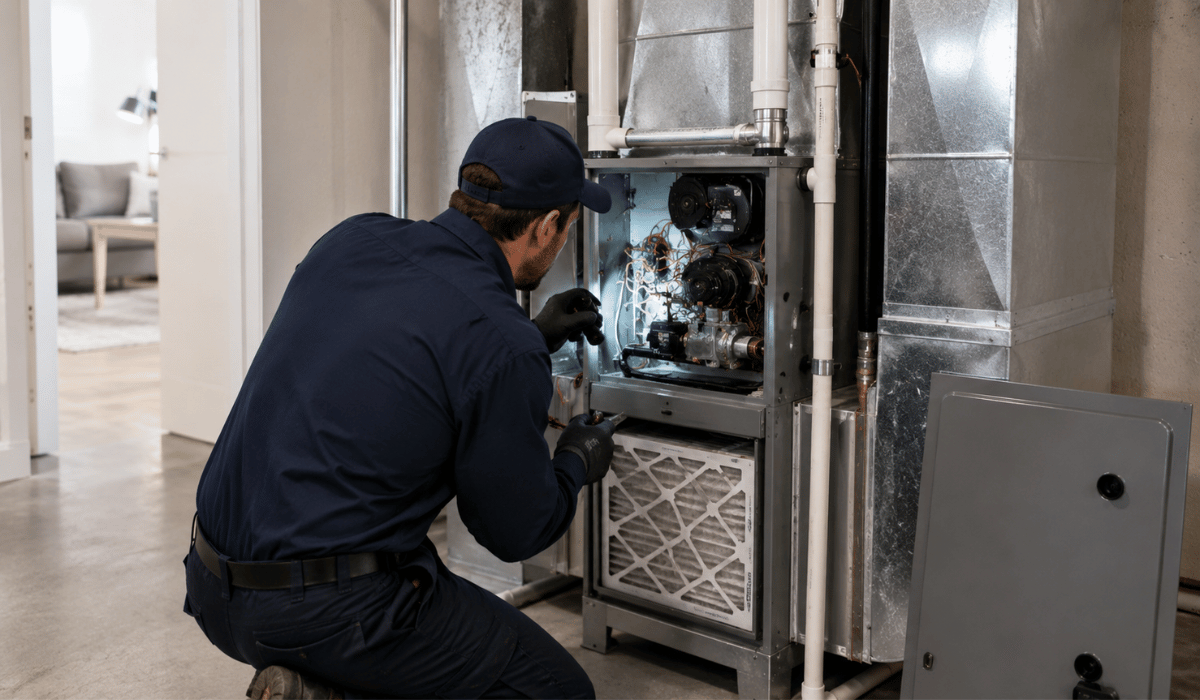
A technician first evaluates your indoor air concerns and inspects the HVAC equipment, ductwork, filter location, and available installation space.
Depending on the purifier, installation may involve adding a media cabinet, UV lamp, or electronic cleaner.
The technician then checks airflow, seals, electrical connections, and system operation. You should also receive instructions for cleaning and replacing filters or lamps.
How Much Maintenance Does an HVAC Air Purifier Need?
Every air-cleaning system requires maintenance. There’s no permanent, maintenance-free solution.
Media filters gradually fill with captured particles. Replacement timing depends on the filter size, household conditions, system runtime, pets, smoke exposure, and renovation activity.
A filter that lasts many months in one house may load much faster in another.
UV lamps may need periodic cleaning and scheduled replacement. Carbon media must be changed after it becomes saturated.
Electronic collection cells usually require careful cleaning and complete drying before they are returned to service.
Ignoring maintenance can reduce air-cleaning performance and may restrict HVAC airflow.
Check the equipment regularly and follow the manufacturer’s instructions rather than relying on a universal replacement schedule.
Is an HVAC Air Purifier Right for Your Home?
Not every home needs the same type of air purifier. Before making a decision, have your HVAC system checked with Holtkamp HVAC & Plumbing and discuss the air-quality problems you’re experiencing.
A technician can help you determine whether an air purifier, upgraded filter, humidity control, or another solution makes the most sense for your home.
Frequently Asked Questions
Does an HVAC air purifier remove dust from the entire home?
It can reduce airborne dust that enters the return ducts and passes through the filter. It won’t remove dust that has already settled on floors, furniture, curtains, or bedding. Regular cleaning and control of dust sources are still necessary.
Can an air purifier help with allergies?
A purifier may reduce airborne pollen, pet dander, and other particles that can affect some people with allergies. Results vary because allergens may also collect on household surfaces. An air purifier is not a medical treatment, so people with ongoing symptoms should speak with a qualified healthcare professional.
Can I install a HEPA filter in my existing HVAC system?
Not always. True HEPA filters can create substantial airflow resistance and may require a specially designed housing, a stronger blower, or a separate bypass system. Many residential systems are better suited to a compatible media filter. An HVAC technician can evaluate the available airflow and filter space.
Will a higher MERV rating always provide better results?
A higher MERV rating generally means improved capture of certain particle sizes, but the filter must be compatible with the HVAC system. A filter that is too restrictive can reduce airflow. The EPA recommends MERV 13, or the highest rating the system’s fan and filter slot can accommodate.
Does an HVAC air purifier run all the time?
Most whole-home systems work when the HVAC blower is running. If the thermostat fan setting is on “Auto,” filtration occurs during heating and cooling cycles. Setting the fan to circulate for longer periods may increase air cleaning, but it can also increase energy use.
Do UV air purifiers remove dust and pollen?
No. UV lamps aren’t particle filters. They are used to address certain biological contaminants, often on HVAC surfaces such as an indoor coil. UV treatment should be paired with appropriate mechanical filtration when dust and pollen are the main concerns.
How often should an HVAC air purifier filter be replaced?
There is no single schedule for every home. Replacement frequency depends on filter size, system runtime, pets, smoke, construction dust, and other household conditions. Inspect the filter regularly and follow the product manufacturer’s instructions.
Is a whole-home purifier better than a portable one?
It depends on the goal. A whole-home system is convenient for treating air moving through central ductwork. A portable purifier may be better for one room or for a home without central ducts. Some households use both approaches to address different areas.
Can an HVAC air purifier remove odors?
A standard particle filter may remove odor-carrying particles, but it won’t capture most gases. Activated carbon or another gas-phase filter may help with certain odors. Persistent smells should be investigated because they may signal moisture, sewage, combustion, or another source requiring direct attention.
How do I know which air purifier is right for my HVAC system?
Begin with an HVAC inspection and identify the specific air quality concern. A technician can check the filter area, blower capacity, duct arrangement, static pressure, and available installation space before recommending compatible equipment.